United Kingdom
Background
The United Kingdom of Great Britain and Northern Ireland was created when the Kingdoms of England and Scotland -- which previously had been distinct states under a single monarchy -- were joined under the 1707 Acts of Union. The island of Ireland was incorporated under the 1800 Acts of Union, while Wales had been part of the Kingdom of England since the 16th century. The United Kingdom has historically played a leading role in developing parliamentary democracy and in advancing literature and science. The 18th and 19th centuries saw the rapid expansion of the British Empire despite the loss of the Thirteen Colonies, and at its zenith in the early 20th century, the British Empire stretched over one fourth of the earth's surface. The first half of the 20th century saw two World Wars seriously deplete the UK's strength and the Irish Republic withdraw from the union. The second half witnessed the dismantling of the Empire and the UK rebuilding itself into a modern and prosperous European nation. As one of five permanent members of the UN Security Council and a founding member of NATO and the Commonwealth of Nations, the UK pursues a global approach to foreign policy. The devolved Scottish Parliament, the National Assembly for Wales, and the Northern Ireland Assembly were established in 1998.
The UK was an active member of the EU after its accession in 1973, although it chose to remain outside the Economic and Monetary Union. However, motivated in part by frustration at a remote bureaucracy in Brussels and massive migration into the country, UK citizens in 2016 voted by 52 to 48 percent to leave the EU. On 31 January 2020, the UK became the only country to depart the EU -- a move known as "Brexit" -- after prolonged negotiations on EU-UK economic and security relationships.
Geographic coordinates
Natural hazards
Area - comparative
Environmental issues
International environmental agreements
Signed, but not ratified: None of the selected agreements
Climate
Coastline
Land boundaries
Border countries (1): Ireland 499 km
Land use
Arable land: 24.8% (2022 est.)
Permanent crops: 0.2% (2022 est.)
Permanent pasture: 44.6% (2022 est.)
Forest: 13.3% (2022 est.)
Other: 17.2% (2022 est.)
Maritime claims
Continental shelf: As defined in continental shelf orders or in accordance with agreed upon boundaries
Exclusive fishing zone: 200 nm
Natural resources
Geography - note
Terrain
Location
Map references
Irrigated land
Total renewable water resources
Population distribution
Elevation
Lowest point: The Fens -4 m
Mean elevation: 162 m
Area
Land: 241,930 sq km
Water: 1,680 sq km
Note 1: England covers 53% of the area, Scotland 32%, Wales 9%, and Northern Ireland 6%
Note 2: Includes Rockall and the Shetland Islands, which are part of Scotland
Age structure
15-64 years: 63.9% (male 22,062,643/female 21,702,401)
65 years and over: 19.3% (2024 est.) (male 6,069,865/female 7,158,544)
Sex ratio
0-14 years: 1.05 male(s)/female
15-64 years: 1.02 male(s)/female
65 years and over: 0.85 male(s)/female
Total population: 0.99 male(s)/female (2024 est.)
Nationality
Adjective: British
School life expectancy (primary to tertiary education)
Male: 17 years (2022 est.)
Female: 18 years (2022 est.)
Urbanization
Rate of urbanization: 0.8% annual rate of change (2020-25 est.)
Drinking water source
Urban: 100% of population (2022 est.)
Rural: 100% of population (2022 est.)
Total: 100% of population (2022 est.)
Unimproved:
Urban: 0% of population (2022 est.)
Rural: 0% of population (2022 est.)
Total: 0% of population (2022 est.)
Major urban areas - population
Physician density
Hospital bed density
Mother's mean age at first birth
Note: Data represents England and Wales only
Dependency ratios
Youth dependency ratio: 26.2 (2024 est.)
Elderly dependency ratio: 30.2 (2024 est.)
Potential support ratio: 3.3 (2024 est.)
Sanitation facility access
Urban: 99.8% of population (2022 est.)
Rural: 99.8% of population (2022 est.)
Total: 99.8% of population (2022 est.)
Unimproved:
Urban: 0.2% of population (2022 est.)
Rural: 0.2% of population (2022 est.)
Total: 0.2% of population (2022 est.)
Ethnic groups
Religions
Languages
Note: The following are recognized regional languages: Scots (about 30% of the population of Scotland), Scottish Gaelic (about 60,000 speakers in Scotland), Welsh (about 20% of the population of Wales), Irish (about 10% of the population of Northern Ireland), Cornish (some 2,000 to 3,000 people in Cornwall) (2012 est.)
Health expenditure
20.7% of national budget (2022 est.)
Child marriage
Gross reproduction rate
Currently married women (ages 15-49)
Youth unemployment rate (ages 15-24)
Male: 14.9% (2024 est.)
Female: 9.7% (2024 est.)
note: % of labor force ages 15-24 seeking employment
Net migration rate
Median age
Male: 40.1 years
Female: 41.5 years
Maternal mortality ratio
Total fertility rate
Population
Male: 34,005,445
Female: 34,453,610
Infant mortality rate
Male: 4.2 deaths/1,000 live births
Female: 3.3 deaths/1,000 live births
Tobacco use
Male: 13.3% (2025 est.)
Female: 9.8% (2025 est.)
Obesity - adult prevalence rate
Death rate
Birth rate
Alcohol consumption per capita
Beer: 3.53 liters of pure alcohol (2019 est.)
Wine: 3.3 liters of pure alcohol (2019 est.)
Spirits: 2.35 liters of pure alcohol (2019 est.)
Other alcohols: 0.61 liters of pure alcohol (2019 est.)
Life expectancy at birth
Male: 80.1 years
Female: 84.4 years
Education expenditure
10.6% national budget (2022 est.)
Population growth rate
Total water withdrawal
Industrial: 1.01 billion cubic meters (2022 est.)
Agricultural: 1.183 billion cubic meters (2022 est.)
Waste and recycling
Percent of municipal solid waste recycled: 34.2% (2022 est.)
Particulate matter emissions
Carbon dioxide emissions
From coal and metallurgical coke: 17.093 million metric tonnes of CO2 (2023 est.)
From petroleum and other liquids: 197.133 million metric tonnes of CO2 (2023 est.)
From consumed natural gas: 126.713 million metric tonnes of CO2 (2023 est.)
Energy consumption per capita
Diplomatic representation from the US
Embassy: 33 Nine Elms Lane, London, SW11 7US
Mailing address: 8400 London Place, Washington DC 20521-8400
Telephone: [44] (0) 20-7499-9000
FAX: [44] (0) 20-7891-3845
Email address and website:
SCSLondon@state.gov
https://uk.usembassy.gov/
Consulate(s) general: Belfast, Edinburgh
Administrative divisions
two-tier counties: Cambridgeshire, Cumbria, Derbyshire, Devon, East Sussex, Essex, Gloucestershire, Hampshire, Hertfordshire, Kent, Lancashire, Leicestershire, Lincolnshire, Norfolk, North Yorkshire, Nottinghamshire, Oxfordshire, Somerset, Staffordshire, Suffolk, Surrey, Warwickshire, West Sussex, Worcestershire
London boroughs and City of London or Greater London: Barking and Dagenham, Barnet, Bexley, Brent, Bromley, Camden, Croydon, Ealing, Enfield, Greenwich, Hackney, Hammersmith and Fulham, Haringey, Harrow, Havering, Hillingdon, Hounslow, Islington, Kensington and Chelsea, Kingston upon Thames, Lambeth, Lewisham, City of London, Merton, Newham, Redbridge, Richmond upon Thames, Southwark, Sutton, Tower Hamlets, Waltham Forest, Wandsworth, Westminster
metropolitan districts: Barnsley, Birmingham, Bolton, Bradford, Bury, Calderdale, Coventry, Doncaster, Dudley, Gateshead, Kirklees, Knowlsey, Leeds, Liverpool, Manchester, Newcastle upon Tyne, North Tyneside, Oldham, Rochdale, Rotherham, Salford, Sandwell, Sefton, Sheffield, Solihull, South Tyneside, St. Helens, Stockport, Sunderland, Tameside, Trafford, Wakefield, Walsall, Wigan, Wirral, Wolverhampton
unitary authorities: Bath and North East Somerset; Bedford; Blackburn with Darwen; Blackpool; Bournemouth, Christchurch and Poole; Bracknell Forest; Brighton and Hove; City of Bristol; Buckinghamshire; Central Bedfordshire; Cheshire East; Cheshire West and Chester; Cornwall; Darlington; Derby; Dorset; Durham County*; East Riding of Yorkshire; Halton; Hartlepool; Herefordshire*; Isle of Wight*; Isles of Scilly; City of Kingston upon Hull; Leicester; Luton; Medway; Middlesbrough; Milton Keynes; North East Lincolnshire; North Lincolnshire; North Northamptonshire; North Somerset; Northumberland*; Nottingham; Peterborough; Plymouth; Portsmouth; Reading; Redcar and Cleveland; Rutland; Shropshire; Slough; South Gloucestershire; Southampton; Southend-on-Sea; Stockton-on-Tees; Stoke-on-Trent; Swindon; Telford and Wrekin; Thurrock; Torbay; Warrington; West Berkshire; West Northamptonshire; Wiltshire; Windsor and Maidenhead; Wokingham; York
Northern Ireland: 5 borough councils, 4 district councils, 2 city councils
borough councils: Antrim and Newtownabbey; Ards and North Down; Armagh City, Banbridge, and Craigavon; Causeway Coast and Glens; Mid and East Antrim
district councils: Derry City and Strabane; Fermanagh and Omagh; Mid Ulster; Newry, Murne, and Down city councils: Belfast; Lisburn and Castlereagh
Scotland: 32 council areas
council areas: Aberdeen City, Aberdeenshire, Angus, Argyll and Bute, Clackmannanshire, Dumfries and Galloway, Dundee City, East Ayrshire, East Dunbartonshire, East Lothian, East Renfrewshire, City of Edinburgh, Eilean Siar (Western Isles), Falkirk, Fife, Glasgow City, Highland, Inverclyde, Midlothian, Moray, North Ayrshire, North Lanarkshire, Orkney Islands, Perth and Kinross, Renfrewshire, Shetland Islands, South Ayrshire, South Lanarkshire, Stirling, The Scottish Borders, West Dunbartonshire, West Lothian
Wales: 22 unitary authorities
unitary authorities: Blaenau Gwent, Bridgend, Caerphilly, Cardiff, Carmarthenshire, Ceredigion, Conwy, Denbighshire, Flintshire, Gwynedd, Isle of Anglesey, Merthyr Tydfil, Monmouthshire, Neath Port Talbot, Newport, Pembrokeshire, Powys, Rhondda Cynon Taff, Swansea, The Vale of Glamorgan, Torfaen, Wrexham
Capital
Geographic coordinates: 51 30 N, 0 05 W
Time difference: UTC 0 (5 hours ahead of Washington, DC, during Standard Time)
Daylight saving time: +1hr, begins last Sunday in March; ends last Sunday in October
Time zone note: The time statements apply to the United Kingdom proper, not to its crown dependencies or overseas territories
Etymology: The name derives from the Roman settlement of Londinium, established on the current site of London around A.D. 43; the original meaning of the name is uncertain
Constitution
Amendment process: Proposed as a bill for an Act of Parliament by the government, by the House of Commons, or by the House of Lords; passage requires agreement by both houses and by the monarch (Royal Assent)
Executive branch
Head of government: Prime Minister Keir STARMER (since 5 July 2024)
Cabinet: Cabinet appointed by the prime minister
Election/appointment process: The monarchy is hereditary; following legislative elections, the leader of the majority party or majority coalition usually becomes the prime minister
Note 1: In addition to serving as the UK head of state, the British sovereign is the constitutional monarch for 14 additional Commonwealth countries (each referred to as a "Commonwealth realm")
Note 2: King CHARLES III succeeded his mother, Queen ELIZABETH II, after serving as Prince of Wales (heir apparent) for over 64 years -- the longest such tenure in British history
Flag
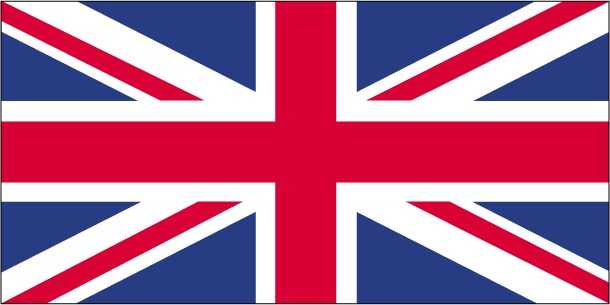
History: The official name is the Union Flag, but commonly called the Union Jack; the design and colors have been the basis for a number of other flags
Independence
Judicial branch
Judge selection and term of office: Judge candidates selected by an independent committee of several judicial commissions, then recommended to the prime minister, and appointed by the monarch; justices serve for life
Subordinate courts: England and Wales: Court of Appeal (civil and criminal divisions); High Court; Crown Court; County Courts; Magistrates' Courts; Scotland: Court of Sessions; Sheriff Courts; High Court of Justiciary; tribunals; Northern Ireland: Court of Appeal in Northern Ireland; High Court; county courts; magistrates' courts; specialized tribunals
Legal system
Legislative branch
Legislative structure: Bicameral
International organization participation
National holiday
Political parties
Conservative and Unionist Party
Democratic Unionist Party or DUP (Northern Ireland)
Green Party of England and Wales or Greens
Labor (Labour) Party
Liberal Democrats (Lib Dems)
Party of Wales (Plaid Cymru)
Reform UK
Scottish National Party or SNP
Sinn Fein (Northern Ireland)
Social Democratic and Labor Party or SDLP (Northern Ireland)
Traditional Unionist Voice or TUV
UK Independence Party or UKIP
Ulster Unionist Party or UUP (Northern Ireland)
Workers Party of Great Britian
Suffrage
Government type
Country name
Conventional short form: United Kingdom
Abbreviation: UK
Etymology: The name United Kingdom is self-descriptive; the name Britain probably derives from the Celtic word pretani, meaning "painted people;" the designation of Great Britain for England, Scotland, and Wales dates back to medieval times and was used to distinguish the island from Little Britain, or Brittany, in modern France; the name Ireland evolved from the Gaelic name Eriu, which is possibly derived from the Old Celtic iveriu, meaning "good land"
Diplomatic representation in the US
Chancery: 3100 Massachusetts Avenue NW, Washington, DC 20008
Telephone: [1] (202) 588-6500
FAX: [1] (202) 588-7870
Email address and website:
Ukin.washington@fcdo.gov.uk
https://www.gov.uk/world/organisations/british-embassy-washington
Consulate(s) general: Atlanta, Boston, Chicago, Houston, Los Angeles, Miami, New York, San Francisco
National anthem(s)
Lyrics/music: Unknown
History: In use since 1745; by tradition, the song serves as both the national and royal anthem; it is known as either "God Save the Queen" or "God Save the King," depending on the gender of the reigning monarch; it also serves as the royal anthem for many Commonwealth nations
International law organization participation
National symbol(s)
Citizenship
Citizenship by descent only: At least one parent must be a citizen of the United Kingdom
Dual citizenship recognized: Yes
Residency requirement for naturalization: 5 years
National heritage
Selected World Heritage Site locales: Giant's Causeway and Causeway Coast (n); Ironbridge Gorge (c); Stonehenge, Avebury, and Associated Sites (c); Castles and Town Walls of King Edward in Gwynedd (c); Blenheim Palace (c); City of Bath (c); Tower of London (c); St Kilda (m); Maritime Greenwich (c); Old and New Towns of Edinburgh (c); Royal Botanic Gardens, Kew (c); The English Lake District (c)


National color(s)
Population below poverty line
note: % of population with income below national poverty line
Household income or consumption by percentage share
Highest 10%: 24.6% (2021 est.)
note: % share of income accruing to lowest and highest 10% of population
Exports - commodities
note: top five export commodities based on value in dollars
Exports - partners
note: top five export partners based on percentage share of exports
Agricultural products
note: top ten agricultural products based on tonnage
Budget
Expenditures: $1.442 trillion (2023 est.)
note: central government revenues (excluding grants) and expenditures converted to US dollars at average official exchange rate for year indicated
Imports - commodities
note: top five import commodities based on value in dollars
Exchange rates
Exchange rates:
0.782 (2024 est.)
0.805 (2023 est.)
0.811 (2022 est.)
0.727 (2021 est.)
0.78 (2020 est.)
Industries
Economic overview
High-income, non-EU European economy; global financial center and dominant service sector; sluggish growth from stringent monetary policy, reduced business investment, low productivity and participation rates; fiscal austerity in face of high public debt
GDP (official exchange rate)
note: data in current dollars at official exchange rate
GDP - composition, by end use
Government consumption: 20.5% (2023 est.)
Investment in fixed capital: 17.6% (2023 est.)
Investment in inventories: -0.4% (2023 est.)
Exports of goods and services: 32% (2023 est.)
Imports of goods and services: -33.1% (2023 est.)
note: figures may not total 100% due to rounding or gaps in data collection
Imports - partners
note: top five import partners based on percentage share of imports
Average household expenditures
On alcohol and tobacco: 3% of household expenditures (2023 est.)
Remittances
0.1% of GDP (2023 est.)
0.1% of GDP (2022 est.)
note: personal transfers and compensation between resident and non-resident individuals/households/entities
Labor force
note: number of people ages 15 or older who are employed or seeking work
Reserves of foreign exchange and gold
$177.915 billion (2023 est.)
$176.41 billion (2022 est.)
note: holdings of gold (year-end prices)/foreign exchange/special drawing rights in current dollars
Public debt
note: central government debt as a % of GDP
Unemployment rate
4% (2023 est.)
3.8% (2022 est.)
note: % of labor force seeking employment
Taxes and other revenues
note: central government tax revenue as a % of GDP
Real GDP (purchasing power parity)
$3.596 trillion (2023 est.)
$3.582 trillion (2022 est.)
note: data in 2021 dollars
Inflation rate (consumer prices)
6.8% (2023 est.)
7.9% (2022 est.)
note: annual % change based on consumer prices
Current account balance
-$118.354 billion (2023 est.)
-$70.962 billion (2022 est.)
note: balance of payments - net trade and primary/secondary income in current dollars
Real GDP per capita
$52,500 (2023 est.)
$53,000 (2022 est.)
note: data in 2021 dollars
Imports
$1.114 trillion (2023 est.)
$1.1 trillion (2022 est.)
note: balance of payments - imports of goods and services in current dollars
Exports
$1.078 trillion (2023 est.)
$1.041 trillion (2022 est.)
note: balance of payments - exports of goods and services in current dollars
Real GDP growth rate
0.4% (2023 est.)
4.8% (2022 est.)
note: annual GDP % growth based on constant local currency
Industrial production growth rate
note: annual % change in industrial value added based on constant local currency
GDP - composition, by sector of origin
Industry: 16.7% (2024 est.)
Services: 72.8% (2024 est.)
note: figures may not total 100% due to non-allocated consumption not captured in sector-reported data
Electricity access
Electrification - urban areas: 99.9%
Electrification - rural areas: 100%
Coal
Consumption: 7.372 million metric tons (2023 est.)
Exports: 981,000 metric tons (2023 est.)
Imports: 6.633 million metric tons (2023 est.)
Proven reserves: 26 million metric tons (2023 est.)
Electricity generation sources
Nuclear: 13.8% of total installed capacity (2023 est.)
Solar: 4.9% of total installed capacity (2023 est.)
Wind: 30.7% of total installed capacity (2023 est.)
Hydroelectricity: 1.7% of total installed capacity (2023 est.)
Biomass and waste: 12.6% of total installed capacity (2023 est.)
Natural gas
Consumption: 63.553 billion cubic meters (2023 est.)
Exports: 15.842 billion cubic meters (2023 est.)
Imports: 45.226 billion cubic meters (2023 est.)
Proven reserves: 180.661 billion cubic meters (2021 est.)
Petroleum
Refined petroleum consumption: 1.406 million bbl/day (2024 est.)
Crude oil estimated reserves: 2.5 billion barrels (2021 est.)
Electricity
Consumption: 262.166 billion kWh (2023 est.)
Exports: 9.449 billion kWh (2023 est.)
Imports: 33.212 billion kWh (2023 est.)
Transmission/distribution losses: 28.961 billion kWh (2023 est.)
Internet users
Internet country code
Broadcast media
Telephones - mobile cellular
Subscriptions per 100 inhabitants: 121 (2022 est.)
Broadband - fixed subscriptions
Subscriptions per 100 inhabitants: 41 (2023 est.)
Telephones - fixed lines
Subscriptions per 100 inhabitants: 39 (2023 est.)
Railways
Civil aircraft registration country code prefix
Airports
Merchant marine
By type: Bulk carrier 34, container ship 46, general cargo 62, oil tanker 13, other 713
note: Includes Channel Islands (total fleet 2; general cargo 1, other 1); excludes Isle of Man
Heliports
Military service age and obligation
Note 1: Women made up 11.7% of the military's full-time personnel in 2024
Note 2: The British military allows Commonwealth nationals who are current UK residents and have been in the country for at least 5 years to apply; it also accepts Irish citizens
Note 3: The British Army has continued the historic practice of recruiting Gurkhas from Nepal to serve in the Brigade of Gurkhas; the British began to recruit Nepalese citizens (Gurkhas) into the East India Company Army during the Anglo-Nepalese War (1814-1816); the Gurkhas subsequently were brought into the British Indian Army and by 1914, there were 10 Gurkha regiments, collectively known as the Gurkha Brigade; following the partition of India in 1947, an agreement between Nepal, India, and Great Britain allowed for the transfer of the 10 regiments from the British Indian Army to the separate British and Indian armies; four of the regiments were transferred to the British Army, where they have since served continuously as the Brigade of Gurkhas
Military expenditures
2.3% of GDP (2024 est.)
2.3% of GDP (2023 est.)
2.3% of GDP (2022 est.)
2.3% of GDP (2021 est.)
Military and security forces
Military and security service personnel strengths
Note: The military also maintains approximately 40-45,000 reserves and other personnel on active duty
Military equipment inventories and acquisitions
Military deployments
Military - note
The UK is a member of the Five Power Defense Arrangements (FPDA), a series of mutual assistance agreements reached in 1971 embracing Australia, Malaysia, New Zealand, Singapore, and the UK; in 2014, the UK led the formation of the Joint Expeditionary Force (JEF), a pool of high-readiness military forces from the Baltic and Scandinavian countries intended to respond to a wide range of contingencies both in peacetime and in times of crisis or conflict; the UK military also has strong bilateral ties with a variety of foreign militaries, particularly the US, with which it has a mutual defense treaty; British and US military forces have routinely operated side-by-side across a wide range of operations; other close military relationships include Australia, France, Germany, and the Netherlands; in 2010, for example, France and the UK signed a declaration on defense and security cooperation that included greater military interoperability and a Combined Joint Expeditionary Force (CJEF), a deployable, combined Anglo-French military force for use in a range of crisis scenarios (2025)
Illicit drugs
Major precursor-chemical producer (2025)
Refugees and internally displaced persons
Stateless persons: 4,672 (2024 est.)
Dependent areas
Transportation - note
Terrorist group(s)
Note: Details about the history, aims, leadership, organization, areas of operation, tactics, targets, weapons, size, and sources of support of the group(s) appear(s) in the Terrorism reference guide
Nuclear energy
Number of nuclear reactors under construction: 2 (2025)
Net capacity of operational nuclear reactors: 5.88GW (2025 est.)
Percent of total electricity production: 12.5% (2023 est.)
Number of nuclear reactors permanently shut down: 36 (2025)
Space program overview
Note: Further details about the key activities, programs, and milestones of the country’s space program, as well as government spending estimates on the space sector, appear in the Space Programs reference guide
Space launch site(s)
Space agency/agencies
Note 1: The UKSA replaced the British National Space Center (BNSC; established in 1985); in 2025, the UK Government announced that the UKSA would be absorbed into the Department for Science, Innovation, and Technology (DSIT) as of April 2026
Note 2: In 2021, the British formed the joint service UK Space Command under the Ministry of Defense for military space operations, space workforce, and space capabilities
Geoparks
Global geoparks and regional networks: Arran; Black Country; Cuilcagh Lakelands (includes Ireland); English Riviera; Fforest Fawr; GeoMôn; Mourne Gullion Strangford; North Pennines AONB; North-West Highlands; Shetland (2025)
Ports
Large: 7
Medium: 24
Small: 67
Very small: 86
Size unknown: 1
Ports with oil terminals: 67
Key ports: Aberdeen, Barrow-in-Furness, Barry, Belfast, Blyth, Bristol, Cardiff, Dundee, Falmouth Harbour, Glasgow, Greenock, Grimsby, Immingham, Kingston-upon-Hull, Leith, Lerwick, Liverpool, London, Londonderry, Lyness, Manchester, Milford Haven, Newport, Peterhead, Plymouth, Portland Harbour, Portsmouth Harbour, Southampton, Sunderland, Teesport, Tynemouth
Legislative branch - lower chamber
Number of seats: 650 (all directly elected)
Electoral system: Plurality/majority
Scope of elections: Full renewal
Term in office: 5 years
Most recent election date: 7/4/2024
Parties elected and seats per party: Labour Party (411); Conservative Party (121); Liberal Democrats (72); Other (46)
Percentage of women in chamber: 40.5%
Expected date of next election: July 2029
Legislative branch - upper chamber
Number of seats: 800 (all appointed)
Parties elected and seats per party: Conservative Party (286); Labour Party (212); Liberal Democrats (76); Crossover (Independents) 180; other (6)
Percentage of women in chamber: 31%
Note: The number of total seats in the House of Lords does not include ineligible members or members on leave of absence
Methane emissions
Agriculture: 1,030.2 kt (2019-2021 est.)
Waste: 1,070.1 kt (2019-2021 est.)
Other: 62 kt (2019-2021 est.)
Gini Index coefficient - distribution of family income
note: index (0-100) of income distribution; higher values represent greater inequality