Mexico
Background
Mexico was the site of several advanced Amerindian civilizations -- including the Olmec, Toltec, Teotihuacan, Zapotec, Maya, and Aztec -- until Spain conquered and colonized the area in the early 16th century. Administered as the Viceroyalty of New Spain for three centuries, it achieved independence early in the 19th century. Elections held in 2000 marked the first time since Mexican Revolution in 1910 that an opposition candidate -- Vicente FOX of the National Action Party (PAN) -- defeated the party in government, the Institutional Revolutionary Party (PRI). He was succeeded in 2006 by another PAN candidate Felipe CALDERON, but Enrique PEÑA NIETO regained the presidency for the PRI in 2012. Left-leaning anti-establishment politician and former mayor of Mexico City (2000-05) Andrés Manuel LÓPEZ OBRADOR, from the National Regeneration Movement (MORENA), became president in 2018.
The US-Mexico-Canada Agreement (USMCA, or T-MEC by its Spanish acronym) entered into force in 2020 and replaced its predecessor, the North American Free Trade Agreement (NAFTA). Mexico amended its constitution in 2019 to facilitate the implementation of the labor components of USMCA.
Mexico is currently the US's second-largest goods trading partner, after Canada. Ongoing economic and social concerns include low real wages, high underemployment, inequitable income distribution, and few advancement opportunities, particularly for the largely indigenous population in the impoverished southern states. Since 2007, Mexico's powerful transnational criminal organizations have engaged in a struggle to control criminal markets, resulting in tens of thousands of drug-related homicides and forced disappearances.
Geographic coordinates
Natural hazards
Volcanism: Volcanic activity in the central-southern part of the country; the volcanoes in Baja California are mostly dormant; Colima (3,850 m) is Mexico's most active volcano and is responsible for periodic evacuations of nearby villagers; it has been deemed a Decade Volcano by the International Association of Volcanology and Chemistry of the Earth's Interior, worthy of study due to its explosive history and close proximity to human populations; Popocatepetl (5,426 m) poses a threat to Mexico City; other historically active volcanoes include Barcena, Ceboruco, El Chichon, Michoacan-Guanajuato, Pico de Orizaba, San Martin, Socorro, and Tacana; see note 2 under "Geography - note"
Area - comparative
Environmental issues
Note: The government considers the lack of clean water and deforestation as national security issues
International environmental agreements
Signed, but not ratified: None of the selected agreements
Climate
Coastline
Land boundaries
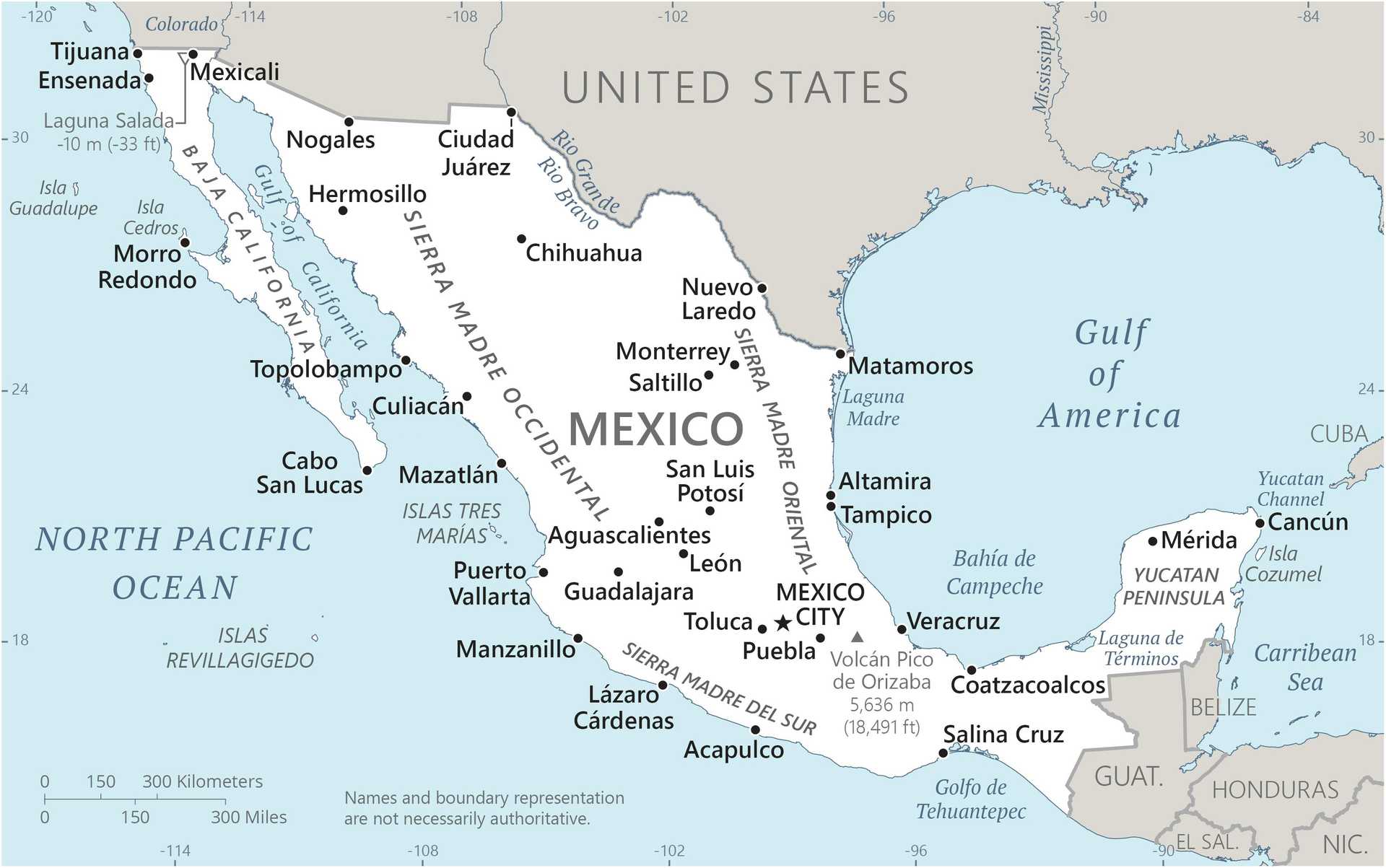
Border countries (3): Belize 276 km; Guatemala 958 km; US 3,155 km
Land use
Arable land: 10.3% (2023 est.)
Permanent crops: 2.3% (2023 est.)
Permanent pasture: 38.1% (2023 est.)
Forest: 34.2% (2023 est.)
Other: 15.1% (2023 est.)
Maritime claims
Contiguous zone: 24 nm
Exclusive economic zone: 200 nm
Continental shelf: 200 nm or to the edge of the continental margin
Natural resources
Geography - note
Note 2: The Sac Actun cave system at 348 km (216 mi) is the longest underwater cave in the world and the second longest cave worldwide, after Mammoth Cave in the United States (see "Geography - note" under United States)
Note 3: The prominent Yucatán Peninsula that divides the Gulf of America from the Caribbean Sea is shared by Mexico, Guatemala, and Belize; on the northern coast of Yucatan near the town of Chicxulub lie the remnants of a massive asteroid or comet crater about 150 km (93 mi) in diameter and extending into the Gulf of America; the impact is believed to have initiated a worldwide climate disruption that caused a mass extinction of 75% of the earth's plant and animal species, including the non-avian dinosaurs
Terrain
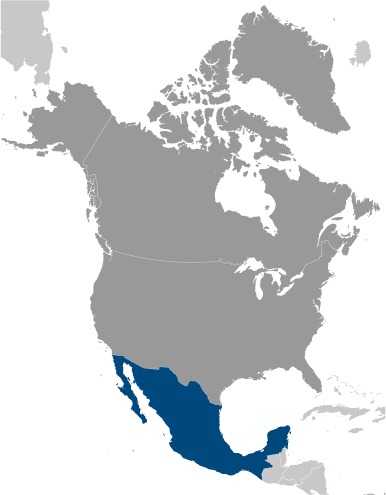
Location
Map references
Irrigated land
Total renewable water resources
Population distribution
Elevation
Lowest point: Laguna Salada -10 m
Mean elevation: 1,111 m
Major aquifers
Major watersheds (area sq km)
Pacific Ocean drainage: (Gulf of California) Colorado (703,148 sq km)
Major lakes (area sq km)
Salt water lake(s): Laguna de Terminos - 1,550 sq km
Major rivers (by length in km)
Note: [s] after country name indicates river source; [m] after country name indicates river mouth
Area
Land: 1,943,945 sq km
Water: 20,430 sq km
Age structure
15-64 years: 68.6% (male 43,651,105/female 45,983,174)
65 years and over: 8.2% (2024 est.) (male 4,600,228/female 6,103,611)
Sex ratio
0-14 years: 1.06 male(s)/female
15-64 years: 0.95 male(s)/female
65 years and over: 0.75 male(s)/female
Total population: 0.96 male(s)/female (2024 est.)
Literacy
Male: 96% (2020 est.)
Female: 94% (2020 est.)
Nationality
Adjective: Mexican
School life expectancy (primary to tertiary education)
Male: 14 years (2022 est.)
Female: 15 years (2022 est.)
Urbanization
Rate of urbanization: 1.4% annual rate of change (2020-25 est.)
Drinking water source
Urban: 100% of population (2022 est.)
Rural: 98.4% of population (2022 est.)
Total: 99.7% of population (2022 est.)
Unimproved:
Urban: 0% of population (2022 est.)
Rural: 1.6% of population (2022 est.)
Total: 0.3% of population (2022 est.)
Major urban areas - population
Physician density
Hospital bed density
Mother's mean age at first birth
Dependency ratios
Youth dependency ratio: 33.9 (2024 est.)
Elderly dependency ratio: 11.9 (2024 est.)
Potential support ratio: 8.4 (2024 est.)
Sanitation facility access
Urban: 100% of population (2022 est.)
Rural: 98.2% of population (2022 est.)
Total: 99.7% of population (2022 est.)
Unimproved:
Urban: 0% of population (2022 est.)
Rural: 1.8% of population (2022 est.)
Total: 0.3% of population (2022 est.)
Ethnic groups
Note: Mexico does not collect census data on ethnicity
Languages
Major-language sample(s):
La Libreta Informativa del Mundo, la fuente indispensable de información básica. (Spanish)
The World Factbook, the indispensable source for basic information.
Health expenditure
10.4% of national budget (2022 est.)
Child marriage
Women married by age 18: 20.7% (2018)
Gross reproduction rate
Currently married women (ages 15-49)
Youth unemployment rate (ages 15-24)
Male: 5.2% (2024 est.)
Female: 6.1% (2024 est.)
note: % of labor force ages 15-24 seeking employment
Net migration rate
Median age
Male: 28.8 years
Female: 32.7 years
Maternal mortality ratio
Total fertility rate
Population
Male: 63,899,138
Female: 66,840,789
Infant mortality rate
Male: 13.4 deaths/1,000 live births
Female: 10.9 deaths/1,000 live births
Tobacco use
Male: 21.8% (2025 est.)
Female: 6.3% (2025 est.)
Obesity - adult prevalence rate
Death rate
Birth rate
Children under the age of 5 years underweight
Alcohol consumption per capita
Beer: 3.72 liters of pure alcohol (2019 est.)
Wine: 0.19 liters of pure alcohol (2019 est.)
Spirits: 0.19 liters of pure alcohol (2019 est.)
Other alcohols: 0.15 liters of pure alcohol (2019 est.)
Life expectancy at birth
Male: 71.6 years
Female: 77.7 years
Education expenditure
14.2% national budget (2022 est.)
Population growth rate
Religions
Total water withdrawal
Industrial: 7.953 billion cubic meters (2022)
Agricultural: 68.523 billion cubic meters (2022)
Waste and recycling
Percent of municipal solid waste recycled: 9.6% (2022 est.)
Particulate matter emissions
Carbon dioxide emissions
From coal and metallurgical coke: 32.087 million metric tonnes of CO2 (2023 est.)
From petroleum and other liquids: 228.279 million metric tonnes of CO2 (2023 est.)
From consumed natural gas: 180.684 million metric tonnes of CO2 (2023 est.)
Energy consumption per capita
Diplomatic representation from the US
Embassy: Paseo de la Reforma 305, Colonia Cuauhtémoc, 06500 Mexico, CDMX
Mailing address: 8700 Mexico City Place, Washington DC 20521-8700
Telephone: (011) [52]-55-5080-2000
FAX: (011) 52-55-5080-2005
Email address and website:
ACSMexicoCity@state.gov
https://mx.usembassy.gov/
Consulate(s) general: Ciudad Juárez, Guadalajara, Hermosillo, Matamoros, Mérida, Monterrey, Nogales, Nuevo Laredo, Tijuana
Administrative divisions
Capital
Geographic coordinates: 19 26 N, 99 08 W
Time difference: UTC-6 (1 hour behind Washington, DC, during Standard Time)
Daylight saving time: DST was permanently removed in October 2022
Time zone note: Mexico has four time zones
Etymology: Name may derive from one of the Nahuatl (Aztec) names for the capital city, Metztlixihtlico, which probably meant "the center of the moon;" alternatively, it may come from Mexica, the original name of the Aztec people
Constitution
Amendment process: Proposed by the Congress of the Union; passage requires approval by at least two thirds of the members present and approval by a majority of the state legislatures
Executive branch
Head of government: President Claudia SHEINBAUM Pardo (since 1 October 2024)
Cabinet: Cabinet appointed by the president
Election/appointment process: President directly elected by simple-majority popular vote for a single 6-year term
Most recent election date: 2 June 2024
Election results:
2024: Claudia SHEINBAUM Pardo elected president; percent of vote - Claudia SHEINBAUM Pardo (MORENA) 59.4%, Xóchitl GÁLVEZ Ruiz (PAN) 27.9%, Jorge Álvarez MÁYNEZ (MC) 10.4%, other 2.3%
2018: Andrés Manuel LÓPEZ OBRADOR elected president; percent of vote - Andrés Manuel LÓPEZ OBRADOR (MORENA) 53.2%, Ricardo ANAYA Cortés (PAN) 22.3%, José Antonio MEADE Kuribreña (PRI) 16.4%, Jaime RODRÍGUEZ Calderón (independent) 5.2%, other 2.9%
2012: Enrique PEÑA NIETO elected president; percent of vote - Enrique PEÑA NIETO (PRI) 38.2%, Andrés Manuel LÓPEZ OBRADOR (PRD) 31.6%, Josefina Eugenia VÁZQUEZ Mota (PAN) 25.4%, other 4.8%
Expected date of next election: 2030
Note: the president is both chief of state and head of government
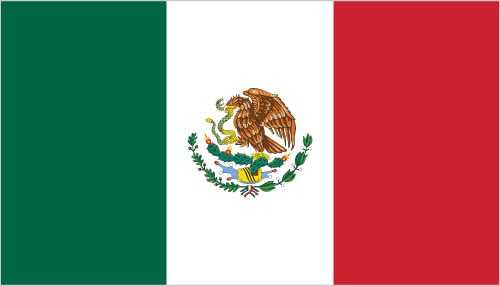
Flag
Meaning: Green stands for hope, joy, and love; white for peace and honesty; red for hardiness, bravery, strength, and valor
Independence
Judicial branch
Judge selection and term of office: Supreme Court justices nominated by the president of the republic and approved by two-thirds vote of the members present in the Senate; justices serve 15-year terms; Electoral Tribunal superior and regional court judges nominated by the Supreme Court and elected by two-thirds vote of members present in the Senate; superior court president elected from among its members to hold office for a 4-year term; other judges of the superior and regional courts serve staggered, 9-year terms
Subordinate courts: Federal level includes circuit, collegiate, and unitary courts; state and district level courts
Note: In April 2021, the Mexican congress passed a judicial reform which changed 7 articles of the constitution and preceded a new Organic Law on the Judicial Branch of the Federation
Legal system
Legislative branch
Legislative structure: Bicameral
Note: As of the 2018 election, senators will be eligible for a second term and deputies up to 4 consecutive terms
International organization participation
National holiday
Political parties
Institutional Revolutionary Party (Partido Revolucionario Institucional) or PRI
Labor Party (Partido del Trabajo) or PT
Mexican Green Ecological Party (Partido Verde Ecologista de México) or PVEM
Movement for National Regeneration (Movimiento Regeneración Nacional) or MORENA
National Action Party (Partido Acción Nacional) or PAN
Party of the Democratic Revolution (Partido de la Revolución Democrática) or PRD
Suffrage
Government type
Country name
Conventional short form: Mexico
Local long form: Estados Unidos Mexicanos
Local short form: Mexico
Former: Mexican Republic, Mexican Empire
Etymology: Name may derive from one of the Nahuatl (Aztec) names for the capital city, Metztlixihtlico, which probably meant "the center of the moon;" alternatively, it may come from Mexica, the original name of the Aztec people
Diplomatic representation in the US
Chancery: 1911 Pennsylvania Avenue NW, Washington, DC 20006
Telephone: [1] (202) 728-1600
FAX: [1] (202) 728-1698
Email address and website:
Mexembusa@sre.gob.mx
https://embamex.sre.gob.mx/eua/index.php/en/
Consulate(s) general: Atlanta (GA), Austin (TX), Boston (MA), Chicago (IL), Dallas (TX), Denver (GA), El Paso (TX), Houston (TX), Laredo (TX), Miami (FL), New York (NY), Nogales (AZ), Phoenix (AZ), Raleigh (NC), Sacramento (CA), San Antonio (TX), San Diego (CA), San Francisco (CA), San Jose (CA), San Juan (Puerto Rico)
Consulate(s): Albuquerque (NM), Boise (ID), Brownsville (TX), Calexico (CA), Del Rio (TX), Detroit (MI), Douglas (AZ), Eagle Pass (TX), Fresno (CA), Indianapolis (IN), Kansas City (MO), Las Vegas (NV), Little Rock (AR), Los Angeles (CA), McAllen (TX), Milwaukee (WI), New Orleans (LA), Oklahoma City (OK), Omaha (NE), Orlando (FL), Oxnard (CA), Philadelphia (PA), Portland (OR), Presidio (TX), Salt Lake City (UT), San Bernardino (CA), Santa Ana (CA), Seattle (WA), St. Paul (MN), Tucson (AZ), Yuma (AZ)
National anthem(s)
Lyrics/music: Francisco Gonzalez BOCANEGRA/Jaime Nuno ROCA
History: Adopted 1943
International law organization participation
National symbol(s)
Citizenship
Citizenship by descent only: Yes
Dual citizenship recognized: Not specified
Residency requirement for naturalization: 5 years
National heritage
Selected World Heritage Site locales: Historic Mexico City (c); Earliest 16th-Century Monasteries on the Slopes of Popocatepetl (c); Teotihuacan (c); Whale Sanctuary of El Vizcaino (n); Monarch Butterfly Biosphere Reserve (n); Tehuacán-Cuicatlán Valley (m); Historic Puebla (c); El Tajin (c); Historic Tlacotalpan (c); Historic Oaxaca and Monte Albán (c); Palenque (c); Chichen-Itza (c); Uxmal (c); Wixárika Route through Sacred Sites to Wirikuta (Tatehuarí Huajuyé) (c)


National color(s)
Population below poverty line
note: % of population with income below national poverty line
Household income or consumption by percentage share
Highest 10%: 34.4% (2022 est.)
note: % share of income accruing to lowest and highest 10% of population
Exports - commodities
note: top five export commodities based on value in dollars
Exports - partners
note: top five export partners based on percentage share of exports
Agricultural products
note: top ten agricultural products based on tonnage
Budget
Expenditures: $417.843 billion (2023 est.)
note: central government revenues (excluding grants) and expenditures converted to US dollars at average official exchange rate for year indicated
Imports - commodities
note: top five import commodities based on value in dollars
Exchange rates
Exchange rates:
18.305 (2024 est.)
17.759 (2023 est.)
20.127 (2022 est.)
20.272 (2021 est.)
21.486 (2020 est.)
Industries
Economic overview
Upper-middle-income economy; highly integrated with US via trade and nearshore manufacturing; weak domestic demand, fiscal consolidation, and trade uncertainty contributing to sluggish growth; low unemployment; challenges from income inequality, corruption, and cartel-based violence
GDP (official exchange rate)
note: data in current dollars at official exchange rate
GDP - composition, by end use
Government consumption: 11.2% (2024 est.)
Investment in fixed capital: 24.2% (2024 est.)
Investment in inventories: 0% (2024 est.)
Exports of goods and services: 36.8% (2024 est.)
Imports of goods and services: -37.9% (2024 est.)
note: figures may not total 100% due to rounding or gaps in data collection
Imports - partners
note: top five import partners based on percentage share of imports
Average household expenditures
On alcohol and tobacco: 2.3% of household expenditures (2023 est.)
Remittances
3.7% of GDP (2023 est.)
4.2% of GDP (2022 est.)
note: personal transfers and compensation between resident and non-resident individuals/households/entities
Labor force
note: number of people ages 15 or older who are employed or seeking work
Debt - external
note: present value of external debt in current US dollars
Reserves of foreign exchange and gold
$214.317 billion (2023 est.)
$201.119 billion (2022 est.)
note: holdings of gold (year-end prices)/foreign exchange/special drawing rights in current dollars
Public debt
note: central government debt as a % of GDP
Unemployment rate
2.8% (2023 est.)
3.3% (2022 est.)
note: % of labor force seeking employment
Taxes and other revenues
note: central government tax revenue as a % of GDP
Real GDP (purchasing power parity)
$2.842 trillion (2023 est.)
$2.751 trillion (2022 est.)
note: data in 2021 dollars
Inflation rate (consumer prices)
5.5% (2023 est.)
7.9% (2022 est.)
note: annual % change based on consumer prices
Current account balance
-$5.611 billion (2023 est.)
-$17.701 billion (2022 est.)
note: balance of payments - net trade and primary/secondary income in current dollars
Real GDP per capita
$21,900 (2023 est.)
$21,400 (2022 est.)
note: data in 2021 dollars
Imports
$674.695 billion (2023 est.)
$672.914 billion (2022 est.)
note: balance of payments - imports of goods and services in current dollars
Exports
$649.729 billion (2023 est.)
$630.347 billion (2022 est.)
note: balance of payments - exports of goods and services in current dollars
Real GDP growth rate
3.3% (2023 est.)
3.7% (2022 est.)
note: annual GDP % growth based on constant local currency
Industrial production growth rate
note: annual % change in industrial value added based on constant local currency
GDP - composition, by sector of origin
Industry: 31.6% (2024 est.)
Services: 58.2% (2024 est.)
note: figures may not total 100% due to non-allocated consumption not captured in sector-reported data
Electricity access
Electrification - urban areas: 99.8%
Electrification - rural areas: 100%
Coal
Consumption: 15.132 million metric tons (2023 est.)
Exports: 4,000 metric tons (2023 est.)
Imports: 8.809 million metric tons (2023 est.)
Proven reserves: 1.16 billion metric tons (2023 est.)
Electricity generation sources
Nuclear: 3.2% of total installed capacity (2023 est.)
Solar: 4.2% of total installed capacity (2023 est.)
Wind: 5.7% of total installed capacity (2023 est.)
Hydroelectricity: 5.2% of total installed capacity (2023 est.)
Geothermal: 1.1% of total installed capacity (2023 est.)
Biomass and waste: 1% of total installed capacity (2023 est.)
Natural gas
Consumption: 97.118 billion cubic meters (2023 est.)
Exports: 27.92 million cubic meters (2023 est.)
Imports: 64.289 billion cubic meters (2023 est.)
Proven reserves: 180.322 billion cubic meters (2021 est.)
Petroleum
Refined petroleum consumption: 1.741 million bbl/day (2024 est.)
Crude oil estimated reserves: 5.786 billion barrels (2021 est.)
Electricity
Consumption: 332.042 billion kWh (2023 est.)
Exports: 1.97 billion kWh (2023 est.)
Imports: 4.863 billion kWh (2023 est.)
Transmission/distribution losses: 45.47 billion kWh (2023 est.)
Internet users
Internet country code
Broadcast media
Telephones - mobile cellular
Subscriptions per 100 inhabitants: 100 (2022 est.)
Broadband - fixed subscriptions
Subscriptions per 100 inhabitants: 21 (2023 est.)
Telephones - fixed lines
Subscriptions per 100 inhabitants: 20 (2023 est.)
Railways
Standard gauge: 23,389 km (2017) 1.435-m gauge (27 km electrified)
Civil aircraft registration country code prefix
Airports
Merchant marine
By type: Bulk carrier 4, general cargo 11, oil tanker 32, other 627
Heliports
Military service age and obligation
Note: As of 2023, women comprised about 10% of the active-duty Army, Air Force, and Navy, and about 14% of the National Guard
Military expenditures
0.7% of GDP (2023 est.)
0.7% of GDP (2022 est.)
0.7% of GDP (2021 est.)
0.6% of GDP (2020 est.)
Military and security forces
Secretariat of National Defense (Secretaria de Defensa Nacional, SEDENA): Army (Ejercito), Mexican Air Force (Fuerza Aerea Mexicana, FAM), National Guard (Guardia Nacional); Secretariat of the Navy (Secretaria de Marina, SEMAR): Mexican Navy (Armada de Mexico (ARM), includes Naval Air Force (FAN), Mexican Naval Infantry Corps (Cuerpo de Infanteria de Marina, Mexmar or CIM))
Secretariat of Security and Civilian Protection/SEDENA: National Guard (2025)
Note: The National Guard was formed in 2019 of personnel from the former Federal Police (disbanded in December 2019) and military police units of the Army and Navy
Military - note
Military and security service personnel strengths
Military equipment inventories and acquisitions
Illicit drugs
Major illicit drug-producing and/or drug-transit country
Major precursor-chemical producer (2025)
Refugees and internally displaced persons
IDPs: 390,250 (2024 est.)
Stateless persons: 13 (2024 est.)
Terrorist group(s)
Note: Details about the history, aims, leadership, organization, areas of operation, tactics, targets, weapons, size, and sources of support of the group(s) appear(s) in the Terrorism reference guide
Nuclear energy
Net capacity of operational nuclear reactors: 1.55GW (2025 est.)
Percent of total electricity production: 4.9% (2023 est.)
Space program overview
Space agency/agencies
Geoparks
Global geoparks and regional networks: Comarca Minera, Hidalgo; Mixteca Alta, Oaxaca (2023)
Ports
Large: 0
Medium: 7
Small: 10
Very small: 14
Size unknown: 4
Ports with oil terminals: 21
Key ports: Acapulco, Ensenada, Manzanillo, Mazatlan, Tampico, Tuxpan, Veracruz
Legislative branch - lower chamber
Number of seats: 500 (all directly elected)
Electoral system: Mixed system
Scope of elections: Full renewal
Term in office: 3 years
Most recent election date: 6/2/2024
Parties elected and seats per party: National Regeneration Movement (MORENA) (236); Ecologist Green Party of Mexico (PVEM) (77); National Action Party (PAN) (72); Labour Party (PT) (51); Institutional Revolutionary Party (PRI) (35); Citizens' Movement (MC) (27); Other (2)
Percentage of women in chamber: 50.2%
Expected date of next election: June 2027
Legislative branch - upper chamber
Number of seats: 128 (all directly elected)
Electoral system: Mixed system
Scope of elections: Full renewal
Term in office: 6 years
Most recent election date: 6/2/2024
Parties elected and seats per party: National Regeneration Movement (MORENA) (60); National Action Party (PAN) (22); Institutional Revolutionary Party (PRI) (16); Ecologist Green Party of Mexico (PVEM) (14); Labour Party (PT) (9); Other (7)
Percentage of women in chamber: 50%
Expected date of next election: June 2030
Methane emissions
Agriculture: 2,372.1 kt (2019-2021 est.)
Waste: 1,832.6 kt (2019-2021 est.)
Other: 49.8 kt (2019-2021 est.)
Key space-program milestones
1985 - first Mexican in space on US Space Shuttle; first communications satellite (Morelos-1) built by US and released from the US Space Shuttle
2015 - first successful launch of MEXSAT series of communications satellites by the US
2021 - signed US-led Artemis Accords for space and lunar exploration
2024 - contributed five autonomous micro-robots (Colmena project) on failed US commercial Moon lander mission
Gini Index coefficient - distribution of family income
note: index (0-100) of income distribution; higher values represent greater inequality
National coat of arms
Adopted in 1968, Mexico’s coat of arms is also used as the Seal of the United Mexican States. The Mexican Golden Eagle, a national symbol, is perched on a prickly pear cactus and eats a snake. Beneath the eagle, oak and laurel leaves are joined by a ribbon in the national colors. The image symbolizes the triumph of good over evil.