Russia
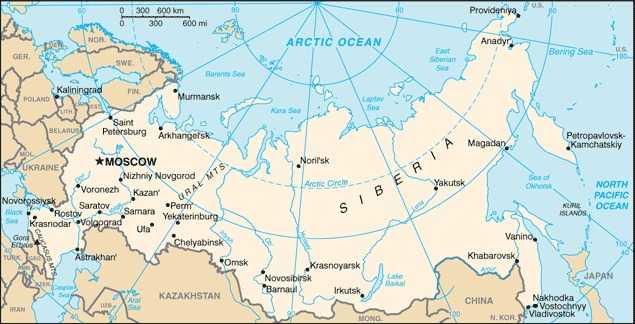
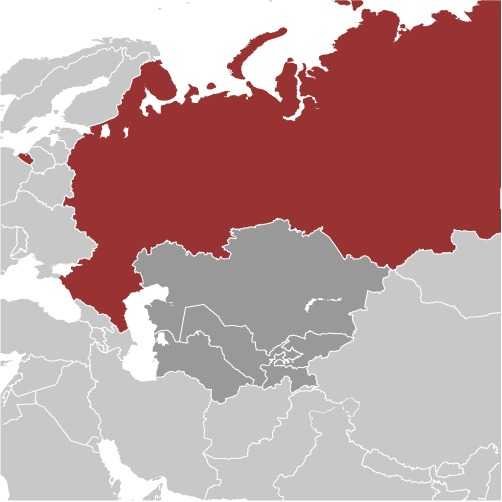
Background
Founded in the 12th century, the Principality of Muscovy emerged from over 200 years of Mongol domination (13th-15th centuries) and gradually conquered and absorbed surrounding principalities. In the early 17th century, a new ROMANOV dynasty continued this policy of expansion across Siberia to the Pacific. Under PETER I (1682-1725), hegemony was extended to the Baltic Sea and the country was renamed the Russian Empire. During the 19th century, more territorial acquisitions were made in Europe and Asia. Defeat in the Russo-Japanese War of 1904-05 contributed to the Revolution of 1905, which resulted in the formation of a parliament and other reforms. Devastating defeats and food shortages in World War I led to widespread rioting in the major cities of the Russian Empire and to the overthrow of the ROMANOV Dynasty in 1917. The communists under Vladimir LENIN seized power soon after and formed the Union of Soviet Socialist Republics (USSR).
The brutal rule of Iosif STALIN (1928-53) strengthened communist control and Russian dominance of the Soviet Union at a cost of tens of millions of lives. After defeating Germany in World War II as part of an alliance with the US (1939-1945), the USSR expanded its territory and influence in Eastern Europe and emerged as a global power. The USSR was the principal US adversary during the Cold War (1947-1991). The Soviet economy and society stagnated in the decades following Stalin's rule, until General Secretary Mikhail GORBACHEV (1985-91) introduced glasnost (openness) and perestroika (restructuring) in an attempt to modernize communism. His initiatives inadvertently released political and economic forces that by December 1991 led to the dissolution of the USSR into Russia and 14 other independent states. In response to the ensuing turmoil during President Boris YELTSIN's term (1991-99), Russia shifted toward a centralized authoritarian state under President Vladimir PUTIN (2000-2008, 2012-present) in which the regime seeks to legitimize its rule through managed elections, populist appeals, a foreign policy focused on enhancing the country's geopolitical influence, and commodity-based economic growth.
In 2014, Russia purported to annex Ukraine's Crimean Peninsula and occupied large portions of two eastern Ukrainian oblasts. In sporadic fighting over the next eight years, more than 14,000 civilians were killed or wounded as a result of the Russian invasion in eastern Ukraine. On 24 February 2022, Russia escalated its conflict with Ukraine by invading the country on several fronts in what has become the largest conventional military attack on a sovereign state in Europe since World War II. The invasion received near-universal international condemnation, and many countries imposed sanctions on Russia and supplied humanitarian and military aid to Ukraine. In September 2022, Russia unilaterally declared its annexation of four Ukrainian oblasts -- Donetsk, Kherson, Luhansk, and Zaporizhzhia -- even though none were fully under Russian control. The annexations remain unrecognized by the international community.
Geographic coordinates
Natural hazards
Volcanism: Kamchatka Peninsula is home to 29 historically active volcanoes, with dozens more in the Kuril Islands; Kliuchevskoi (4,835 m) is Kamchatka's most active volcano; Avachinsky and Koryaksky volcanoes, which pose a threat to the city of Petropavlovsk-Kamchatsky, have been deemed Decade Volcanoes by the International Association of Volcanology and Chemistry of the Earth's Interior, worthy of study due to their explosive history and close proximity to human populations; other notable historically active volcanoes include Bezymianny, Chikurachki, Ebeko, Gorely, Grozny, Karymsky, Ketoi, Kronotsky, Ksudach, Medvezhia, Mutnovsky, Sarychev Peak, Shiveluch, Tiatia, Tolbachik, and Zheltovsky; see note 2 under "Geography - note"
Area - comparative
Environmental issues
International environmental agreements
Signed, but not ratified: Air Pollution-Sulfur 94
Climate
Coastline
Land boundaries
Border countries (14): Azerbaijan 338 km; Belarus 1,312 km; China (southeast) 4,133 km and China (south) 46 km; Estonia 324 km; Finland 1,309 km; Georgia 894 km; Kazakhstan 7,644 km; North Korea 18 km; Latvia 332 km; Lithuania (Kaliningrad Oblast) 261 km; Mongolia 3,452 km; Norway 191 km; Poland (Kaliningrad Oblast) 209 km; Ukraine 1,944 km
Land use
Arable land: 7.4% (2023 est.)
Permanent crops: 0.1% (2023 est.)
Permanent pasture: 5.6% (2023 est.)
Forest: 50.7% (2023 est.)
Other: 35.9% (2023 est.)
Maritime claims
Contiguous zone: 24 nm
Exclusive economic zone: 200 nm
Continental shelf: 200-m depth or to the depth of exploitation
Natural resources
Note: formidable obstacles of climate, terrain, and distance hinder exploitation of natural resources
Geography - note
Note 2: Russia's far east, particularly the Kamchatka Peninsula, lies along the Ring of Fire, which is a belt bordering the Pacific Ocean that contains about 75% of the world's volcanoes and up to 90% of the world's earthquakes
Note 3: Mount El'brus is Europe's tallest peak; Lake Baikal, the deepest lake in the world, is estimated to hold one fifth of the world's fresh surface water
Note 4: Kaliningrad oblast is an exclave annexed from Germany after World War II; its capital city of Kaliningrad -- formerly Koenigsberg -- is the only Baltic port in Russia that remains ice-free in the winter
Terrain
Location
Map references
Irrigated land
Total renewable water resources
Population distribution
Elevation
Lowest point: Caspian Sea -28 m
Mean elevation: 600 m
Major aquifers
Major rivers (by length in km)
Note: [s] after country name indicates river source; [m] after country name indicates river mouth
Major watersheds (area sq km)
Atlantic Ocean drainage: (Black Sea) Don (458,694 sq km), Dnieper (533,966 sq km)
Pacific Ocean drainage: Amur (1,929,955 sq km)
Internal (endorheic basin) drainage: (Caspian Sea basin) Volga (1,410,951 sq km)
Major lakes (area sq km)
Salt water lake(s): Caspian Sea (shared with Iran, Azerbaijan, Turkmenistan, and Kazakhstan) - 374,000 sq km; Ozero Malyye Chany - 2,500 sq km; Curonian Lagoon (shared with Lithuania) - 1,620 sq km
Note - the Caspian Sea is the World's largest lake
Area
Land: 16,377,742 sq km
Water: 720,500 sq km
Age structure
15-64 years: 65.7% (male 45,007,073/female 47,518,221)
65 years and over: 17.8% (2024 est.) (male 8,533,448/female 16,491,955)
Sex ratio
0-14 years: 1.06 male(s)/female
15-64 years: 0.95 male(s)/female
65 years and over: 0.52 male(s)/female
Total population: 0.87 male(s)/female (2024 est.)
Literacy
Male: 99.9% (2021 est.)
Female: 99.9% (2021 est.)
Nationality
Adjective: Russian
School life expectancy (primary to tertiary education)
Male: 15 years (2023 est.)
Female: 15 years (2023 est.)
Urbanization
Rate of urbanization: 0.11% annual rate of change (2020-25 est.)
Drinking water source
Urban: 98.9% of population (2022 est.)
Rural: 91.5% of population (2022 est.)
Total: 97.1% of population (2022 est.)
Unimproved:
Urban: 1.1% of population (2022 est.)
Rural: 8.5% of population (2022 est.)
Total: 2.9% of population (2022 est.)
Major urban areas - population
Physician density
Hospital bed density
Mother's mean age at first birth
Dependency ratios
Youth dependency ratio: 25.2 (2024 est.)
Elderly dependency ratio: 27 (2024 est.)
Potential support ratio: 3.7 (2024 est.)
Sanitation facility access
Urban: 95.4% of population (2022 est.)
Rural: 71.4% of population (2022 est.)
Total: 89.4% of population (2022 est.)
Unimproved:
Urban: 4.6% of population (2022 est.)
Rural: 28.6% of population (2022 est.)
Total: 10.6% of population (2022 est.)
Ethnic groups
Note: Nearly 200 national and/or ethnic groups are represented in Russia's 2010 census
Religions
Note: Estimates are of practicing worshipers; Russia has large populations of non-practicing believers and non-believers, a legacy of over seven decades of official atheism under Soviet rule; Russia officially recognizes Orthodox Christianity, Islam, Judaism, and Buddhism as the country's traditional religions
Languages
Major-language sample(s):
Книга фактов о мире – незаменимый источник базовой информации. (Russian)
The World Factbook, the indispensable source for basic information.
Note: data represent native language spoken
Health expenditure
13.8% of national budget (2022 est.)
Gross reproduction rate
Currently married women (ages 15-49)
Child marriage
Women married by age 18: 6.2% (2017)
Youth unemployment rate (ages 15-24)
Male: 8.8% (2024 est.)
Female: 9.8% (2024 est.)
note: % of labor force ages 15-24 seeking employment
Net migration rate
Median age
Male: 39.4 years
Female: 44.5 years
Maternal mortality ratio
Total fertility rate
Population
Male: 65,496,805
Female: 75,324,005
Infant mortality rate
Male: 7.2 deaths/1,000 live births
Female: 5.8 deaths/1,000 live births
Tobacco use
Male: 40.2% (2025 est.)
Female: 15.1% (2025 est.)
Obesity - adult prevalence rate
Death rate
Birth rate
Alcohol consumption per capita
Beer: 3.04 liters of pure alcohol (2019 est.)
Wine: 0.97 liters of pure alcohol (2019 est.)
Spirits: 3.16 liters of pure alcohol (2019 est.)
Other alcohols: 0.12 liters of pure alcohol (2019 est.)
Life expectancy at birth
Male: 67.4 years
Female: 77.4 years
Education expenditure
14.3% national budget (2018 est.)
Population growth rate
Total water withdrawal
Industrial: 29.03 billion cubic meters (2022 est.)
Agricultural: 18.64 billion cubic meters (2022 est.)
Waste and recycling
Percent of municipal solid waste recycled: 5.3% (2022 est.)
Particulate matter emissions
Carbon dioxide emissions
From coal and metallurgical coke: 479.311 million metric tonnes of CO2 (2023 est.)
From petroleum and other liquids: 453.103 million metric tonnes of CO2 (2023 est.)
From consumed natural gas: 912.076 million metric tonnes of CO2 (2023 est.)
Energy consumption per capita
Diplomatic representation from the US
Embassy: 55,75566° N, 37,58028° E
Mailing address: 5430 Moscow Place, Washington DC 20521-5430
Telephone: [7] (495) 728-5000
FAX: [7] (495) 728-5090
Email address and website:
MoscowACS@state.gov
https://ru.usembassy.gov/
Consulate(s) general: Vladivostok (suspended status), Yekaterinburg (suspended status)
Administrative divisions
Oblasts: Amur (Blagoveshchensk), Arkhangelsk, Astrakhan, Belgorod, Bryansk, Chelyabinsk, Irkutsk, Ivanovo, Kaliningrad, Kaluga, Kemerovo, Kirov, Kostroma, Kurgan, Kursk, Leningrad (Gatchina), Lipetsk, Magadan, Moscow, Murmansk, Nizhniy Novgorod, Novgorod, Novosibirsk, Omsk, Orenburg, Orel, Penza, Pskov, Rostov, Ryazan, Sakhalin (Yuzhno-Sakhalinsk), Samara, Saratov, Smolensk, Sverdlovsk (Yekaterinburg), Tambov, Tomsk, Tula, Tver, Tyumen, Ulyanovsk, Vladimir, Volgograd, Vologda, Voronezh, Yaroslavl
Republics: Adygeya (Maykop), Altay (Gorno-Altaysk), Bashkortostan (Ufa), Buryatiya (Ulan-Ude), Chechnya (Groznyy), Chuvashiya (Cheboksary), Dagestan (Makhachkala), Ingushetiya (Magas), Kabardino-Balkariya (Nal'chik), Kalmykiya (Elista), Karachayevo-Cherkesiya (Cherkessk), Kareliya (Petrozavodsk), Khakasiya (Abakan), Komi (Syktyvkar), Mariy-El (Yoshkar-Ola), Mordoviya (Saransk), North Ossetia (Vladikavkaz), Sakha [Yakutiya] (Yakutsk), Tatarstan (Kazan), Tyva (Kyzyl), Udmurtiya (Izhevsk)
Autonomous districts: Chukotka (Anadyr'), Khanty-Mansi-Yugra (Khanty-Mansiysk), Nenets (Nar'yan-Mar), Yamalo-Nenets (Salekhard)
Federal subjects: Altay (Barnaul), Kamchatka (Petropavlovsk-Kamchatskiy), Khabarovsk, Krasnodar, Krasnoyarsk, Perm, Primorskiy [Maritime] (Vladivostok), Stavropol, Zabaykalsk [Transbaikal] (Chita)
Federal cities: Moscow [Moskva], Saint Petersburg [Sankt-Peterburg]
Autonomous province: Yevreyskaya [Jewish] (Birobidzhan)
Note 1: Administrative divisions have the same names as their administrative centers; exceptions show the administrative center name in parentheses
Note 2: The United States does not recognize Russia's annexation or renaming of Ukraine's Autonomous Republic of Crimea and the municipality of Sevastopol; it similarly does not recognize the annexation of the Ukrainian oblasts Donetsk, Luhansk, Zaporizhzhia, and Kherson
Capital
Geographic coordinates: 55 45 N, 37 36 E
Time difference: UTC+3 (8 hours ahead of Washington, DC, during Standard Time)
Daylight saving time: Does not observe daylight savings time (DST)
Time zone note: Russia has 11 time zones, the largest number of contiguous time zones of any country in the world; in 2014, two time zones were added and DST dropped
Etymology: Named after the Moskva River; the origin of the river's name is unclear
Constitution
Amendment process: Proposed by the president of the Russian Federation, by either house of the Federal Assembly, by the government of the Russian Federation, or by legislative (representative) bodies of the Federation's constituent entities; proposals to amend the government’s constitutional system, human and civil rights and freedoms, and procedures for amending or drafting a new constitution require formation of a Constitutional Assembly; passage of such amendments requires two-thirds majority vote of its total membership; passage in a referendum requires participation of an absolute majority of eligible voters and an absolute majority of valid votes; approval of proposed amendments to the government structure, authorities, and procedures requires approval by the legislative bodies of at least two thirds of the Russian Federation's constituent entities
Executive branch
Head of government: Premier Mikhail Vladimirovich MISHUSTIN (since 16 January 2020)
Cabinet: The government is composed of the premier, his deputies, and ministers, all appointed by the president; the premier is also confirmed by the Duma
Election/appointment process: President directly elected by absolute-majority popular vote in 2 rounds, if needed, for a 6-year term (eligible for a second consecutive term)
Most recent election date: 15-17 March 2024
Election results:
2024: Vladimir PUTIN reelected president; percent of vote - Vladimir PUTIN (independent) 88.5%, Nikolay KHARITONOV (Communist Party) 4.4%, Vladislav DAVANKOV (New People party) 3.9%, Leonid SLUTSKY (Liberal Democrats) 3.2%
2018: Vladimir PUTIN reelected president; percent of vote - Vladimir PUTIN (independent) 77.5%, Pavel GRUDININ (CPRF) 11.9%, Vladimir ZHIRINOVSKIY (LDPR) 5.7%, other 4.9%; Mikhail MISHUSTIN (independent) approved as premier by Duma; vote - 383 to 0
Expected date of next election: 2030
Note: A Presidential Administration provides staff and policy support to the president, drafts presidential decrees, and coordinates policy among government agencies; a Security Council also reports directly to the president
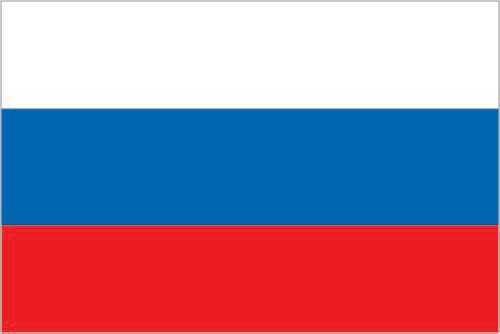
Flag
Meaning: Colors may have been based on the Dutch flag, but no official meaning is assigned
History: Created when Russia built its first naval vessels, and was used mostly as a naval flag until the 19th century
Note: Inspired several other Slavic countries to adopt horizontal tricolors of the same colors in different arrangements
Independence
Judicial branch
Judge selection and term of office: All members of Russia's 3 highest courts nominated by the president and appointed by the Federation Council (the upper house of the legislature); members of all 3 courts appointed for life
Subordinate courts: Regional (kray) and provincial (oblast) courts; Moscow and St. Petersburg city courts; autonomous province and district courts (the 21 Russian republics have court systems specified by their own constitutions)
Legal system
Legislative branch
Legislative structure: Bicameral
Note 1: The State Duma now includes 3 representatives from the "Republic of Crimea," while the Federation Council includes 2 each from the "Republic of Crimea" and the "Federal City of Sevastopol," both regions that Russia occupied and attempted to annex from Ukraine and that the US does not recognize as part of Russia
International organization participation
National holiday
Note: Commemorates the Declaration of State Sovereignty of the Russian Soviet Federative Socialist Republic (RSFSR)
Political parties
Civic Platform or CP
Communists of Russia or CPCR
Communist Party of the Russian Federation or CPRF
Cossack Party of the Russian Federation or CosPRF
Democratic Party of Russia or DPR
Green Alternative or GA
Liberal Democratic Party of Russia or LDPR
New People or NP
Party for Fairness! or PARZAS!
Party of Direct Democracy or PDD
Party of Progress or PP
Party of Pensioners or RPPSJ
Party of Russia's Rebirth or PRR
Party of Social Protection or PSP
Rodina
Russian Ecological Party or The Greens
Russian Party of Freedom and Justice or RPFJ
Russia United Democratic Party or Yabloko
United Russia or UR
Suffrage
Government type
Country name
Conventional short form: Russia
Local long form: Rossiyskaya Federatsiya
Local short form: Rossiya
Former: Russian Empire, Russian Soviet Federative Socialist Republic
Etymology: Russian lands were referred to as Muscovy until PETER I declared the Empire of All Russias in 1721; the new name aimed at identifying the new Russia with European political tradition; "Rus" was the Old Finnish name given to Varangians (eastern Vikings) who entered the area in the 9th century
Diplomatic representation in the US
Chancery: 2650 Wisconsin Avenue NW, Washington, DC 20007
Telephone: [1] (202) 298-5700
FAX: [1] (202) 298-5735
Email address and website:
Rusembusa@mid.ru
https://washington.mid.ru/en/
Consulate(s) general: Houston, New York
National anthem(s)
Lyrics/music: Sergey Vladimirovich MIKHALKOV/Aleksandr Vasilyevich ALEKSANDROV
History: Adopted 2000; Russia adopted the tune of the Soviet Union's anthem (composed in 1939), as well as new lyrics; MIKHALKOV, who wrote the new lyrics, also authored the Soviet lyrics in 1943
International law organization participation
National symbol(s)
Citizenship
Citizenship by descent only: At least one parent must be a citizen of Russia
Dual citizenship recognized: Yes
Residency requirement for naturalization: 3-5 years
National heritage
Selected World Heritage Site locales: Historic Centre of Saint Petersburg and Related Groups of Monuments (c); Kizhi Pogost (c); Kremlin and Red Square, Moscow (c); Historic Monuments of Novgorod and Surroundings (c); White Monuments of Vladimir and Suzdal (c); Architectural Ensemble of the Trinity Sergius Lavra in Sergiev Posad (c); Church of the Ascension, Kolomenskoye (c); Lake Baikal (n); Volcanoes of Kamchatka (n); Ensemble of the Ferapontov Monastery (c); Historic and Architectural Complex of the Kazan Kremlin (c); Citadel, Ancient City and Fortress Buildings of Derbent (c); Uvs Nuur Basin (n); Ensemble of the Novodevichy Convent (c); Natural System of Wrangel Island Reserve (n); Historical Centre of the City of Yaroslavl (c); Lena Pillars Nature Park (n); Bolgar Historical and Archaeological Complex (c); Assumption Cathedral and Monastery of the town-island of Sviyazhsk (c); Churches of the Pskov School of Architecture (c); Petroglyphs of Lake Onega and the White Sea (c); Rock Paintings of Shulgan-Tash Cave (c)


National color(s)
Population below poverty line
note: % of population with income below national poverty line
Household income or consumption by percentage share
Highest 10%: 26.6% (2021 est.)
note: % share of income accruing to lowest and highest 10% of population
Exports - commodities
note: top five export commodities based on value in dollars
Exports - partners
note: top five export partners based on percentage share of exports
Agricultural products
note: top ten agricultural products based on tonnage
Budget
Expenditures: $635.809 billion (2023 est.)
note: central government revenues (excluding grants) and expenditures converted to US dollars at average official exchange rate for year indicated
Imports - commodities
note: top five import commodities based on value in dollars
Exchange rates
Exchange rates:
85.162 (2023 est.)
68.485 (2022 est.)
73.654 (2021 est.)
72.105 (2020 est.)
64.738 (2019 est.)
Industries
Economic overview
GDP (official exchange rate)
note: data in current dollars at official exchange rate
GDP - composition, by end use
Government consumption: 18.6% (2024 est.)
Investment in fixed capital: 22.1% (2024 est.)
Investment in inventories: 4.2% (2024 est.)
Exports of goods and services: 21.9% (2024 est.)
Imports of goods and services: -17.6% (2024 est.)
note: figures may not total 100% due to rounding or gaps in data collection
Imports - partners
note: top five import partners based on percentage share of imports
Average household expenditures
On alcohol and tobacco: 5.9% of household expenditures (2023 est.)
Remittances
0.1% of GDP (2023 est.)
0.1% of GDP (2022 est.)
note: personal transfers and compensation between resident and non-resident individuals/households/entities
Labor force
note: number of people ages 15 or older who are employed or seeking work
Debt - external
note: present value of external debt in current US dollars
Reserves of foreign exchange and gold
$581.71 billion (2022 est.)
$632.242 billion (2021 est.)
note: holdings of gold (year-end prices)/foreign exchange/special drawing rights in current dollars
Public debt
note: central government debt as a % of GDP
Unemployment rate
3.1% (2023 est.)
3.9% (2022 est.)
note: % of labor force seeking employment
Taxes and other revenues
note: central government tax revenue as a % of GDP
Real GDP (purchasing power parity)
$5.835 trillion (2023 est.)
$5.607 trillion (2022 est.)
note: data in 2021 dollars
Inflation rate (consumer prices)
3.4% (2020 est.)
4.5% (2019 est.)
note: annual % change based on consumer prices
Current account balance
$49.439 billion (2023 est.)
$237.735 billion (2022 est.)
note: balance of payments - net trade and primary/secondary income in current dollars
Real GDP per capita
$39,900 (2023 est.)
$38,200 (2022 est.)
note: data in 2021 dollars
Imports
$379.659 billion (2023 est.)
$347.384 billion (2022 est.)
note: balance of payments - imports of goods and services in current dollars
Exports
$465.22 billion (2023 est.)
$640.878 billion (2022 est.)
note: balance of payments - exports of goods and services in current dollars
Real GDP growth rate
4.1% (2023 est.)
-1.4% (2022 est.)
note: annual GDP % growth based on constant local currency
Industrial production growth rate
note: annual % change in industrial value added based on constant local currency
GDP - composition, by sector of origin
Industry: 30.7% (2024 est.)
Services: 57.5% (2024 est.)
note: figures may not total 100% due to non-allocated consumption not captured in sector-reported data
Electricity access
Electrification - urban areas: 99.1%
Electrification - rural areas: 100%
Coal
Consumption: 290.763 million metric tons (2023 est.)
Exports: 211.944 million metric tons (2023 est.)
Imports: 20.765 million metric tons (2023 est.)
Proven reserves: 162.166 billion metric tons (2023 est.)
Electricity generation sources
Nuclear: 19.3% of total installed capacity (2023 est.)
Solar: 0.2% of total installed capacity (2023 est.)
Wind: 0.7% of total installed capacity (2023 est.)
Hydroelectricity: 17.6% of total installed capacity (2023 est.)
Biomass and waste: 0.3% of total installed capacity (2023 est.)
Natural gas
Consumption: 474.448 billion cubic meters (2023 est.)
Exports: 124.479 billion cubic meters (2023 est.)
Imports: 5.724 billion cubic meters (2023 est.)
Proven reserves: 47.805 trillion cubic meters (2021 est.)
Petroleum
Refined petroleum consumption: 3.863 million bbl/day (2023 est.)
Crude oil estimated reserves: 80 billion barrels (2021 est.)
Electricity
Consumption: 1.011 trillion kWh (2023 est.)
Exports: 18.66 billion kWh (2023 est.)
Imports: 2.852 billion kWh (2023 est.)
Transmission/distribution losses: 97.301 billion kWh (2023 est.)
Internet users
Internet country code
Broadcast media
Telephones - mobile cellular
Subscriptions per 100 inhabitants: 169 (2021 est.)
Broadband - fixed subscriptions
Subscriptions per 100 inhabitants: 25 (2022 est.)
Telephones - fixed lines
Subscriptions per 100 inhabitants: 15 (2022 est.)
Railways
Narrow gauge: 957 km
Civil aircraft registration country code prefix
Airports
Merchant marine
By type: Bulk carrier 15, container ship 20, general cargo 976, oil tanker 387, other 1,512
Heliports
Military service age and obligation
Note 1: In 2022, Russia's parliament approved a law removing the upper age limit for contractual service in the military; also in 2022, President Vladimir PUTIN signed a decree allowing dual-national Russians and those with permanent residency status in foreign countries to be drafted into the army for military service
Note 2: Historically, the Russian military has taken in about 260,000 conscripts each year in two semi-annual drafts (Spring and Fall)
Note 3: Prior to the full-scale invasion of Ukraine in 2022, approximately 40-45,000 women served in the Russian Armed Forces
Note 4: Since 2015, foreigners 18-30 with a good command of Russian have been allowed to join the military on five-year contracts and become eligible for Russian citizenship after serving three years; in October 2022, the Interior Ministry opened up recruitment centers for foreigners to sign a one-year service contract with the armed forces, other troops, or military formations participating in the invasion of Ukraine with the promise of simplifying the process of obtaining Russian citizenship
Military expenditures
5% of GDP (2023 est.)
4.5% of GDP (2022 est.)
4% of GDP (2021 est.)
4% of GDP (2020 est.)
Military and security forces
Federal National Guard Troops Service of the Russian Federation (FSVNG, National Guard, Russian Guard, or Rosgvardiya)
Federal Security Services (FSB): Federal Border Guard Service (includes land and maritime forces) (2025)
Note 1: The Unmanned Systems Forces were established in 2025
Note 2: The National Guard was created in 2016 as an independent agency for internal/regime security, combating terrorism and narcotics trafficking, protecting important state facilities and government personnel, and supporting border security; it also works closely with the Armed Forces; forces under the National Guard include the Special Purpose Mobile Units (OMON), Special Rapid Response Detachment (SOBR), and Interior Troops (VV)
Note 3: The Ministry of Internal Affairs, Federal Security Service, Investigative Committee, Office of the Prosecutor General, and National Guard are responsible for law enforcement; the Federal Security Service is responsible for state security, counterintelligence, and counterterrorism, as well as for fighting organized crime and corruption; the Ministry of Internal Affairs includes the national police force
Military - note
In February 2022, Russia launched a full-scale military invasion of Ukraine, beginning what is the largest war in Europe since World War II ended in 1945; Russian military forces occupied Ukraine’s province of Crimea in 2014, and Moscow subsequently backed separatist forces in the Donbas region of Ukraine with arms, equipment, and training, as well as Russian military troops, although Moscow denied their presence prior to 2022
Russia intervened in the Syrian civil war at the request of the Syrian Government from September 2015 until the collapse of the ASAD regime in December 2024; it was Moscow’s first overseas military expeditionary operation since the Soviet era; Russian assistance included air support, arms and equipment, intelligence, military advisors, private military contractors, special operations forces, and training; Russia seized the Georgian regions of Abkhazia and South Ossetia by force in 2008 (2025)
Military and security service personnel strengths
Note: In September 2024, President PUTIN ordered the Russian military to increase in size to 1.5 million personnel
Military deployments
Note: Russia is also assessed to have thousands of paramilitary security personnel and private military contractors deployed in Africa, including in Burkina Faso, Central African Republic, Libya, Mali, Niger, and Sudan
Military equipment inventories and acquisitions
Refugees and internally displaced persons
IDPs: 172,783 (2024 est.)
Stateless persons: 90,185 (2024 est.)
Trafficking in persons
Terrorist group(s)
Note: Details about the history, aims, leadership, organization, areas of operation, tactics, targets, weapons, size, and sources of support of the group(s) appear(s) in the Terrorism reference guide
Nuclear energy
Number of nuclear reactors under construction: 4 (2025)
Net capacity of operational nuclear reactors: 26.8GW (2025 est.)
Percent of total electricity production: 18.4% (2023 est.)
Number of nuclear reactors permanently shut down: 11 (2025)
Space program overview
Space launch site(s)
Note 1: The Baikonur cosmodrome and the surrounding area are leased and administered by Russia until 2050 for approximately $115 million/year; the cosmodrome was originally built by the Soviet Union in the mid-1950s and is the site of the World's first successful satellite launch (Sputnik) in 1957; it is also the largest space launch facility in the World, comprising 15 launch pads for space launch vehicles, four launch pads for testing intercontinental ballistic missiles, more than 10 assembly and test facilities, and other infrastructure
Note 2: In 2018, Kazakhstan and Russia agreed that Kazakhstan would build, maintain, and operate a new space launch facility (Baiterek) at the Baikonur space center (estimated to be ready for operations in 2025)
Space agency/agencies
Note 1: Russia’s space strategy is defined jointly by Roscosmos and the Ministry of Defense
Note 2: Roscosmos was established from a merger of the Federal Space Agency and the state-owned United Rocket and Space Corporation; it began as the Russian Space Agency (RSA or RKA) in 1992 and restructured in 1999 and 2004 as the Russian Aviation and Space Agency and then the Federal Space Agency
Geoparks
Global geoparks and regional networks: Yangan-Tau (2023)
Ports
Large: 4
Medium: 5
Small: 19
Very small: 38
Size unknown: 1
Ports with oil terminals: 32
Key ports: Arkhangels'k, De Kastri, Dudinka, Kaliningrad, Murmansk, Novorossiysk, Sankt-Peterburg, Vladivostok, Vyborg
Legislative branch - lower chamber
Number of seats: 450 (all directly elected)
Electoral system: Mixed system
Scope of elections: Full renewal
Term in office: 5 years
Most recent election date: 9/19/2021
Parties elected and seats per party: United Russia (326); Communist Party (KPRF) (57); A Just Russia (28); Liberal Democratic Party of Russia (LDPR) (23); Other (16)
Percentage of women in chamber: 16.4%
Expected date of next election: September 2026
Legislative branch - upper chamber
Number of seats: 170 (all appointed)
Percentage of women in chamber: 18.5%
National coat of arms
Methane emissions
Agriculture: 1,972.6 kt (2019-2021 est.)
Waste: 4,069.8 kt (2019-2021 est.)
Other: 363.2 kt (2019-2021 est.)
Key space-program milestones
1961-1964 - launched first man, first woman, and first multi-member crew into space
1965 - launched first probe to successfully land on the Moon
1967 - initial launch of Soviet-made Soyuz series space launch vehicle (SLV)
1971 - placed first space station (Salyut) in orbit and successfully landed a probe on Venus
1975 - joint Soviet (Soyuz)-US (Apollo) space mission
1986 - began operation of Mir space station (in orbit until 2001)
1995 - Global Navigation Satellite System (GLObalnaya NAvigatsionnaya Sputnikovaya Sistema or GLONASS) constellation completed
2014 - initial launch of Angara SLV series
2021 - announced agreements with China to send a robotic probe to an asteroid and jointly establish a station on the Moon
2023 - launch first of a planned series of Moon landers (Luna-25; crashed on Moon's surface); announced intent to place first module of a new space station in orbit by 2027
Gini Index coefficient - distribution of family income
note: index (0-100) of income distribution; higher values represent greater inequality